


Managing projects with effective task management isn't straightforward. Software teams often lose valuable time chasing updates, fixing miscommunication, or tracking progress manually. In fact, research shows that teams waste nearly 20% of their time searching for information instead of focusing on core work. According to McKinsey report, employees spend 1.8 hours every day (or 9.3 hours per week), which is approximately 20% of the workweek, searching for information to get their jobs done. For software development projects, where speed, precision, and collaboration are critical, this inefficiency can lead to missed deadlines and unhappy clients.
This is where sprint planning complements with task management systems solve this challenge by centralizing tasks, streamlining collaboration, and improving visibility across projects. They give teams the clarity needed to deliver quality software on time and within budget.
This blog explains what task management systems are and highlights seven key benefits tailored for software development teams.
Definition: A task management system or a task management dashboard system is an aspect of project management. It is designed to plan, assign, track, and complete tasks efficiently. Unlike simple checklists, these systems support collaboration, workload balancing, time tracking, and performance monitoring. These capabilities are essential for software development projects.
For software development teams, task management systems act as a control center. They help product managers, developers, testers, and designers stay aligned across complex builds.
Here are the fundamentals of task management working:
- Task Prioritization: What Comes First?
- Assigning Responsibilities: Who Does What?
- Setting Deadlines: When Will it Be Done?
- Monitoring Progress: Checking In
See how Sprint Planning works in our video.
Software development is too complex to manage with scattered tools and manual updates. A missed milestone can easily cascade into delays, overruns, and dissatisfied clients.
Task management systems bring order to the chaos with dashboards, optimized workloads, real-time monitoring, and built-in quality checks. Sprint planning ensures these systems are used with purpose, defining priorities, aligning teams, and keeping projects outcome-driven.
Bottom line: For software development teams, combining sprint planning with task management isn't just about efficiency, it's about building reliable software, delivering on time, and securing long-term client trust.
Here's how task management systems, when guided by sprint planning, empower or benefit software dev teams.
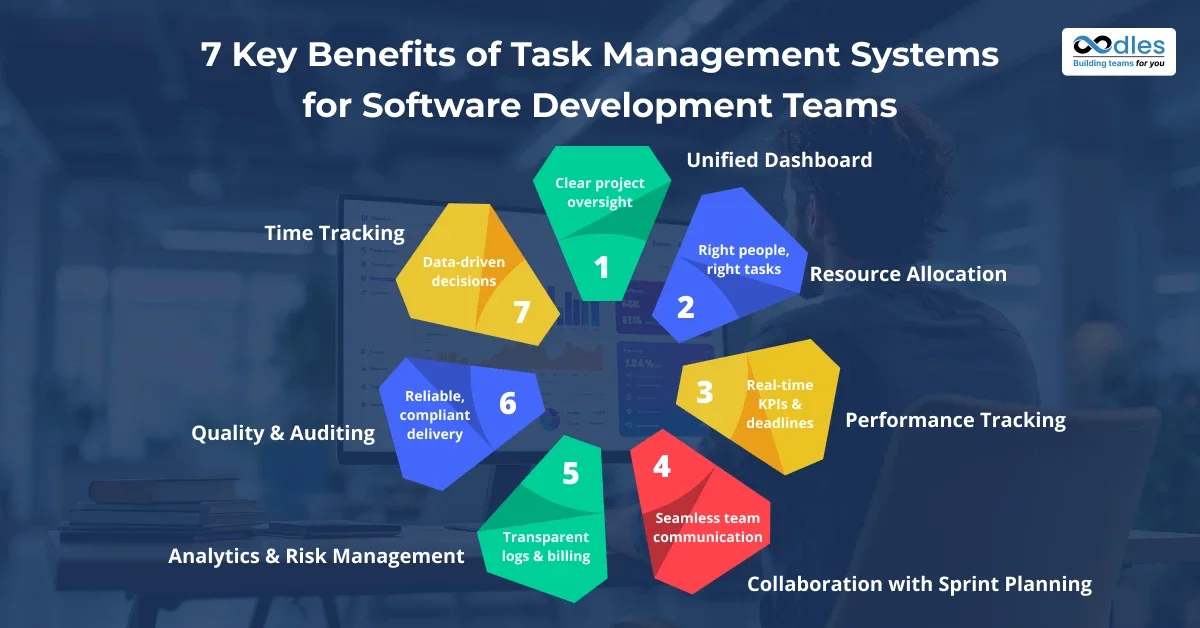
A single dashboard consolidates timelines, deliverables, resource allocations, and progress into one view. Managers no longer need to chase updates through emails or spreadsheets. Clarity is available at a glance.
Example: A team working on a web platform can view the status of backend APIs, UI components, and QA testing in one place. If testing delays are spotted, resources can be reassigned instantly.
Assigning the right tasks to the right people prevents burnout and idle time. Task management systems highlight workloads, skill sets, and availability, enabling managers to optimize assignments.
Example: If one developer is overloaded with bug fixes while another has lighter tasks, managers can balance workloads to avoid slowdowns and keep morale high.
Check out our blog on | How Will Resource Allocation in Project Management Evolve Next?
Software projects succeed when KPIs, deadlines, and productivity are closely monitored. Task management systems provide real-time updates so issues can be flagged before they escalate.
Example: During a sprint, if reports show only half the planned features are progressing mid-way, managers can step in early, shift priorities, or bring in extra support to stay on track.
From sprint planning to bug resolution, smooth collaboration is key. Task management systems provide shared workspaces, notifications, and progress updates that keep everyone aligned.
Example: A tester logs a critical bug, and the developer instantly gets notified. Once fixed, QA sees the update in real time, eliminating unnecessary back-and-forth.
Detailed time logs strengthen accountability, ensure accurate billing, and reveal productivity trends. For agencies, they also create transparency with clients.
Example: A dev agency building an eCommerce platform tracks hours separately for frontend, backend, and QA. The client receives a detailed invoice breakdown, building trust through transparency.
Why not switch to a time tracking or timesheet app now? Watch the full video about this feature.
Quality is non-negotiable in software development. Many task management systems include audit trails, review checkpoints, and release workflows to ensure compliance and maintainability.
Example: For a healthcare app, every code change passes through a checklist logged in the system. This creates an audit trail that proves compliance before release.
Read this blog to uncover about Auditing Checklist | Project and Task Audit Checklist
Advanced analytics offer insights into project health, resource utilization, and risks. These help managers adapt quickly and make smarter decisions.
Example: A software firm notices most bugs come from a single module. Analytics highlight the trend, prompting a deeper code review. Fixing the core issue reduces bug counts across releases.
Check This | Cost Variance Analytics and Schedule Variance
Sprint planning and task management systems together create a structured approach to software project delivery. While sprint planning defines clear goals and priorities, task management systems ensure those goals are tracked, executed, and completed efficiently. This combination reduces delays, improves collaboration, and gives teams the visibility they need to stay aligned. For software development teams, adopting these practices is not just about improving productivity - it's about building high-quality software, meeting client expectations, and achieving long-term project success.
Ready to Streamline Your Projects?
At Oodles, we help businesses optimize their software development processes with the right task management dashboard guidance. From implementing task management solutions to building custom dashboards, we ensure your teams stay on track and deliver measurable results.
Contact us today.
Q1. What is the main purpose of a task management system for software teams?
A task management system helps software teams organize, assign, and track tasks efficiently. It ensures visibility across projects, reduces miscommunication, and improves delivery timelines.
Q2. What are the key features you want in a task management system?
Look for features like task assignment, sprint planning support, real-time tracking, collaboration tools, work breakdown structure, time logging, and analytics for better decision-making.
Q3. How does task management help with resource allocation?
They track workloads, skill sets, and availability. This allows managers to assign tasks more effectively, prevent burnout, and keep the project on schedule.
Q4. Is a task management system useful for client transparency?
Yes. Features like time tracking, audit trails, and detailed reporting give clients visibility into progress, effort, and billing, which builds trust.
Q5. What is the primary purpose of sprint planning?
The main purpose of sprint planning is to define clear sprint goals and select tasks from the backlog to complete. It ensures the team is aligned, workloads are realistic, and priorities are set for the sprint.


© Copyright 2009-2026 Oodles Technologies. All Rights Reserved.