Oodles Logo
Get a Free Quote
AI iconShare Your Requirements
Insights
Oodles Platform
Author Img
Saumya leverages her remarkable expertise as a Content Writer, supported by a deep reservoir of knowledge in the domain. With her extensive background in content writing, Saumya assumes the role of a content strategist with exceptional aptitude. Within this role, she crafts captivating social media posts and thoroughly researched blog entries, both instrumental in shaping a distinctive brand identity. Through seamless collaboration with her team, she amplifies her cooperative skills to drive client growth and advancement effectively.

Saumya Srivastava (Author)

Associate Consultant L1- Content Development

Technical Contributors
Author Img

Pawanpreet Singh

Solutions Architect

Pawanpreet is an seasoned Project Manager with a wealth of knowledge in software development, specializing in frontend and mobile applications. He possesses a strong command of project management tools, including Jira, Trello, and others. With a proven track record, he has successfully overseen the delivery of multiple software development projects, managing budgets and large teams. Notable projects he has contributed to include TimeForge, Yogyata, Kairos, Veto, Inspirien App, and more. Pawanpreet excels in developing and maintaining project plans, schedules, and budgets, ensuring timely delivery while staying within allocated resources. He collaborates closely with clients to define project scope and requirements, establish timelines and milestones, and effectively manage expectations. Regular project status meetings are conducted by him, providing clients and stakeholders with consistent updates on project progress, risks, and issues. Additionally, he coaches and mentors project leads, offering guidance on project management best practices and supporting their professional development.
Author Img

Manish Kumar Narang

Sr. Project Manager- Technology

Manish is an experienced Backend Developer with several years of industry experience in the IT field. He possesses a wide range of skills, including expertise in Backend languages like Core Java, J2EE, Hibernate, Spring/Spring Boot, and Python. Manish is also proficient in relational databases such as MySQL, PostgreSQL, and Oracle. He has hands-on experience in API implementations, web services development, testing, and deployments. Manish has contributed to various internal and client projects, including PMO, Catalyst, Communication-Scaffold, Oodles-Dashboard, and Devops Support, delivering significant business value. He is known for his innovative mindset and excellent problem-solving abilities. He keeps himself updated with new technologies by reading about them. He is skilled at collaborating closely with clients to define project scope and requirements, establish project timelines and milestones, and manage expectations. Manish conducts regular project status meetings, ensuring regular updates to clients and stakeholders regarding project progress, risks, and issues. Additionally, he serves as a mentor and coach to junior developers, offering guidance on project management best practices and fostering their skills development.

Future of Workload Management with IP Tracking

Author Img
Saumya Srivastava
Nov 04, 2025
Blog Img
Area Of Expertise:
Status and Resource Tracking

As modern operations become increasingly hybrid and decentralized, traditional ways of managing productivity and accountability are being redefined. One of the emerging technologies shaping this shift is IP tracking or IP address tracking, a data-driven method that offers visibility into status and resource tracking, workload distribution, and remote attendance, while integrating smoothly with dashboard management systems to provide real-time insights for effective workload management.

This blog explores how IP tracking is transforming workload management, its benefits, and what the future holds for organizations adopting this technology.
 

The Shift Toward Smarter Workload Management

The last few years have seen a surge in remote and hybrid work models. While this flexibility enhances employee satisfaction, it also introduces challenges in monitoring workloads, ensuring compliance, and maintaining data security.

To address these challenges, organizations are embracing digital tools that provide location intelligence, behavioral insights, and activity mapping, and IP tracking is at the forefront of this evolution. By integrating IP tracking into workload management processes, teams can gain better control over task allocation and resource utilization.

Watch this quick video on [Real-Time Resource Tracking and Dashboard Visibility].
 

The Growing IP Tracking Market

This is not a niche trend. Sources from Business Research Insights suggest that the global IP tracking software market is projected to reach USD 1.3 billion by 2033, marking a significant shift toward IP-based intelligence. 

This growth highlights the increasing reliance on IP-based intelligence to improve workload management, optimize resources, and enable data-driven decision-making across industries.

IP Tracking Growth Chart: Sources from Business Research Insights


What is IP Tracking in Workload  Management? 

IP (Internet Protocol) tracking allows businesses to monitor the network locations employees use to access company systems. It verifies where, when, and how employees log in, ensuring access is secure and legitimate.

In workload management and dashboard management systems, IP tracking integrates seamlessly with HRMS, payroll, and project management tools to:

  • Validate remote work sessions and activity logs 
  • Detect unusual login patterns or unauthorized access 
  • Provide location-based analytics on team productivity 
  • Enhance compliance with organizational or client-specific data policies

    By adding IP tracking, organizations strengthen their workload management and ensure real-time visibility of all ongoing tasks.

Read more about | 8 Smart Steps for Effective Resource Tracking
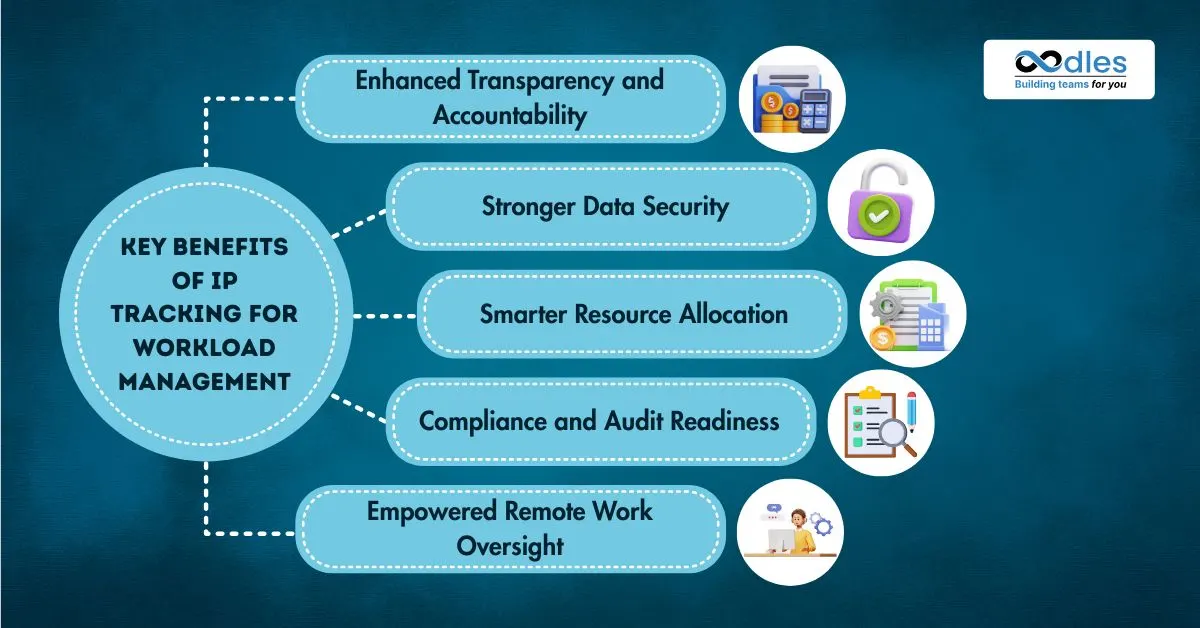
 

Key Benefits of IP Tracking for Modern Workloads
 

Key Benefits of IP Tracking for Modern Workloads
  1. Enhanced Transparency and Accountability
    IP tracking creates a verifiable digital footprint of employee activity, helping managers maintain clear records for workload management and performance evaluations.
  2. Stronger Data Security
    Monitoring IP access points helps companies detect suspicious logins and prevent potential breaches before they escalate. 
  3. Smarter Resource Allocation
    Analytics derived from IP data reveal workload trends, enabling managers to allocate tasks and resources more effectively. 
  4. Compliance and Audit Readiness
    IP tracking ensures compliance with data regulations through geolocation-based access control, which is especially critical for finance, healthcare, and government projects. 
  5. Empowered Remote Work Oversight
    Managers can oversee distributed workloads without micromanagement, focusing on output and efficiency rather than hours logged.

    Explore | The Hidden Costs of Poor Resource Tracking (and How to Avoid Them)

Ethical and Legal Considerations

While IP tracking provides valuable insights, it must be implemented responsibly. Organizations should ensure transparency with employees, secure consent, and comply with data protection laws such as GDPR or CCPA.

Best practices include:

The Future: AI-Driven IP Insights

The future of workload management will combine AI and predictive analytics with IP tracking to move from reactive monitoring to proactive decision-making.

Imagine systems that:

  • Detect productivity anomalies automatically
  • Suggest optimal remote working hours based on network trends
  • Predict burnout risks by correlating IP activity with workload intensity
    These AI-powered insights will transform workload management, shifting focus from mere tracking to empowering employees and optimizing resources.

    Check this guide | How to Track Resource Productivity with Performance Metrics

Final Thoughts

IP tracking represents a strategic advancement in understanding and managing distributed workloads. When paired with ethical policies and AI insights, it is not just a monitoring tool, it is a framework for building trust, security, and efficiency in the workplace.

Organizations that integrate IP tracking into their workload management and dashboard management systems will be better equipped to balance flexibility with accountability, the hallmark of a future-ready enterprise.

Ready to Modernize Workload Oversight with Oodles?

Empower your teams with Oodles' advanced Status and Resource Tracking solution, designed to help you:
- Know availability instantly
- Balance workloads efficiently
- Track progress in real time
- Reassign tasks in seconds

Build a smarter, more connected digital workplace, powered by IP tracking, analytics, and automation within your workload management and dashboard management systems.

Contact us today to get started.

FAQs

1. What is status and resource tracking in workload management?
It is a system that allows managers to monitor task progress, employee availability, and resource allocation in real time, ensuring efficient workload distribution.

2. How does IP tracking enhance dashboard management systems?
IP tracking provides secure, real-time insights into employee activity and location, enabling dashboards to display accurate workload, project progress, and resource availability.

3. Can IP tracking detect unauthorized access or suspicious activity?
Yes, IP tracking identifies unusual login patterns, alerting managers to potential security breaches before they escalate.

4. Is employee privacy affected by IP tracking?
When implemented responsibly with clear policies and consent, IP tracking focuses only on work-related systems and does not infringe on personal privacy.

5. Is IP tracking legal?
Yes, it is completely legal to track IP addresses as long as it is not done for criminal purposes. Organizations must still comply with local privacy and data protection laws.