


In project management, budgets, schedules, and deliverables usually get the most attention. Yet one critical factor often slips through the cracks: how effectively resources are being tracked. Poor resource tracking doesn't just create small inconveniences, it quietly drives up costs that can take a serious toll on project outcomes. These costs show up in missed deadlines, idle hours, duplicated work, and stressed employees. The good news is that with the right approach, and the use of reliable resource tracking software, these risks can be minimized.
Many managers assume that as long as projects finish, resource tracking is under control. In reality, the hidden costs are often buried in daily inefficiencies that don't stand out until they accumulate. Let's look at some of the most common ways poor tracking erodes budgets and performance.
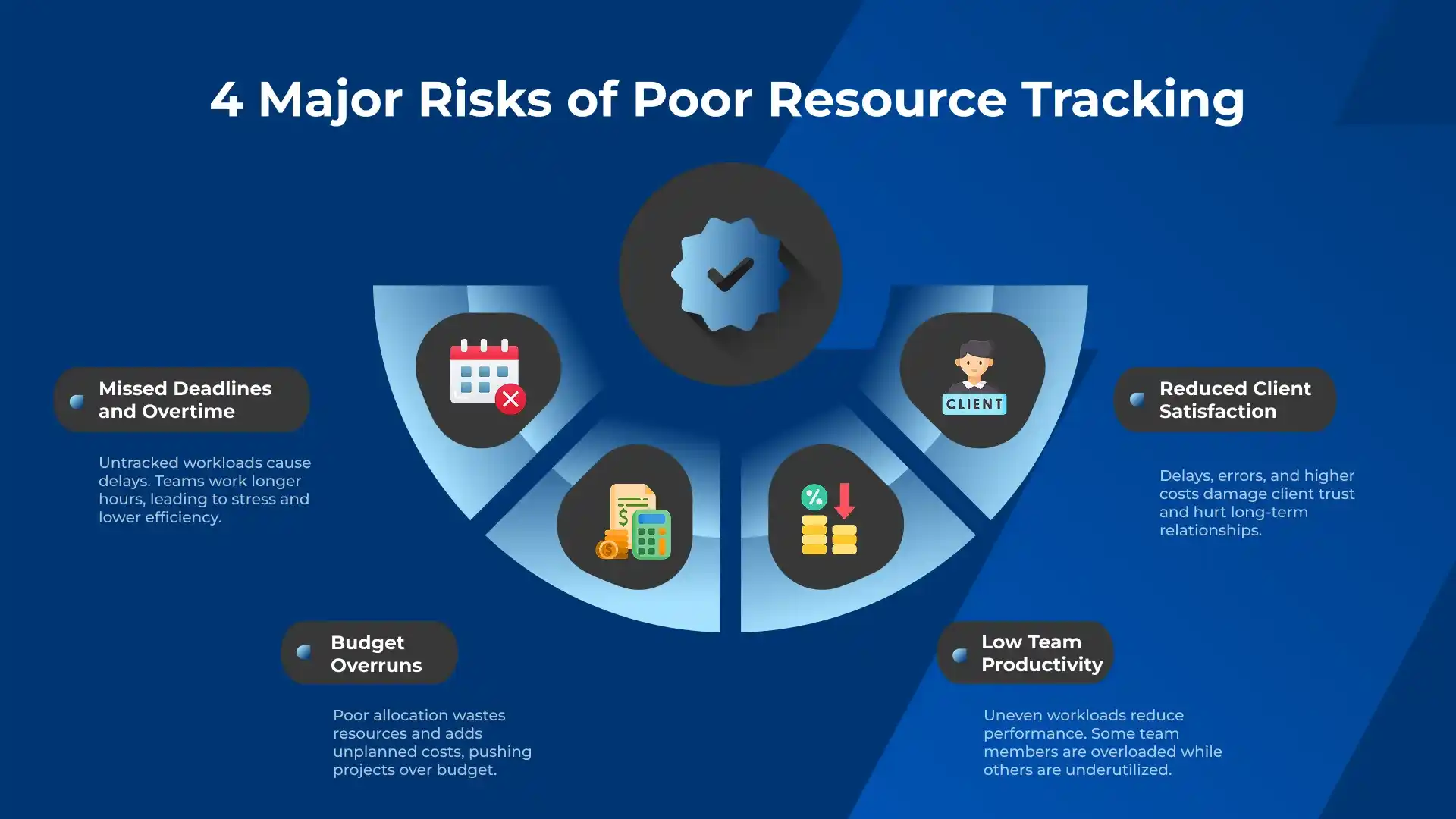
When resources are poorly tracked, conflicts and gaps go unnoticed. Two projects may rely on the same employee at the same time, or critical work may stall because no one realized a dependency wasn't met. The result is missed deadlines, last-minute overtime, and often the need to bring in outside contractors at premium rates. These extra costs pile up even when projects eventually get delivered.
Poor tracking leads to duplication of efforts, underutilized assets, or overstaffing. Without visibility, managers may assign more people than necessary to a task, or fail to notice when a valuable resource sits idle. Over time, these inefficiencies push budgets beyond their limits and make forecasting less reliable.
Unclear assignments and imbalanced workloads are common when resource tracking is weak. Employees end up waiting for inputs, jumping between unrelated tasks, or spending time on work that isn't a priority. This kind of confusion lowers productivity and increases project duration, raising costs indirectly.
For service-based businesses, hidden costs eventually surface for the client. Delays, unexpected charges, or a decline in quality can damage trust and lead to dissatisfied customers. In competitive industries, reputation loss can be even more expensive than missed revenue.
Across industries, the pattern is the same: poor resource tracking creates inefficiencies that drain money, time, and morale.
If you notice several of these signals, chances are your organization is losing money due to poor resource tracking.
The first step is acknowledging that poor tracking has a measurable financial impact. The second step is building systems that improve visibility and control. While manual methods like spreadsheets may work in the early stages, they often fail to scale. This is where resource tracking software proves its value.
Modern resource tracking software provides a centralized view of tasks, workloads, and availability. Managers can immediately see who is overbooked, which resources are underused, and where bottlenecks are likely to appear. This prevents surprises and enables faster decisions.
With real-time data, managers can align resources with actual demand. The software highlights idle capacity and prevents overloading, making it easier to plan accurately without overspending on staff or tools.
When responsibilities are clearly assigned and tracked, employees know what is expected of them. This creates accountability and helps eliminate wasted effort.
Historical data collected by resource tracking software makes it easier to forecast future needs. Managers can identify trends, predict workloads, and prevent last-minute hiring or overtime. This leads to more accurate budgeting and scheduling.
Most advanced systems integrate with task management, time tracking, and reporting. This reduces the need to switch between tools, ensuring that data flows smoothly and decisions are based on a complete picture.
When teams move from poor tracking to structured resource management, the benefits extend beyond cost control. Workflows become smoother, employees are less stressed, and clients receive better results. In the long term, effective tracking can lead to:
Poor resource tracking often creates hidden costs that quietly drain budgets and disrupt projects. From missed deadlines to budget overruns, these challenges can frustrate teams and erode client trust. Reliable resource tracking software helps organizations gain visibility, balance workloads, and plan more effectively, turning potential losses into measurable savings.
At Oodles, we have built a project management platform that simplifies resource tracking and helps organizations avoid these hidden costs. Our platform includes features for sprint planning, workload management, time tracking, and performance monitoring, all designed to give teams a clear view of progress and availability. By using these tools in one integrated system, businesses can manage projects more efficiently, avoid delays, and maintain better control over budgets. Stay ahead of hidden costs with better project management. Get started now.


© Copyright 2009-2026 Oodles Technologies. All Rights Reserved.